UPSC Prelims has evolved its approach to testing Polity and Governance knowledge. The examination no longer restricts itself to constitutional provisions or static institutional frameworks. Instead, it demands analytical understanding of constitutional mechanisms, integrated awareness of governance reforms, and contextual comprehension of judicial pronouncements and policy initiatives.
Aspirants relying solely on standard polity textbooks and superficial current affairs coverage find themselves unprepared for the nuanced and application-oriented nature of contemporary polity questions. VisionIAS’s PT365 Polity, Governance and Social Issues, addresses this preparation gap through a framework that integrates constitutional foundations with current governance developments, enabling aspirants to build the comprehensive understanding that UPSC Prelims 2026 demands. The PT365 Polity, Governance and Social Issues 2026 also incorporates social issues coverage, recognizing UPSC’s increasing tendency to integrate social welfare topics with constitutional and governance frameworks.
Comprehensive Coverage: Key Topics in PT365 Polity
PT365 Polity, Governance and Social Issues delivers strategically curated content covering both foundational constitutional provisions and contemporary governance developments that hold examination relevance.
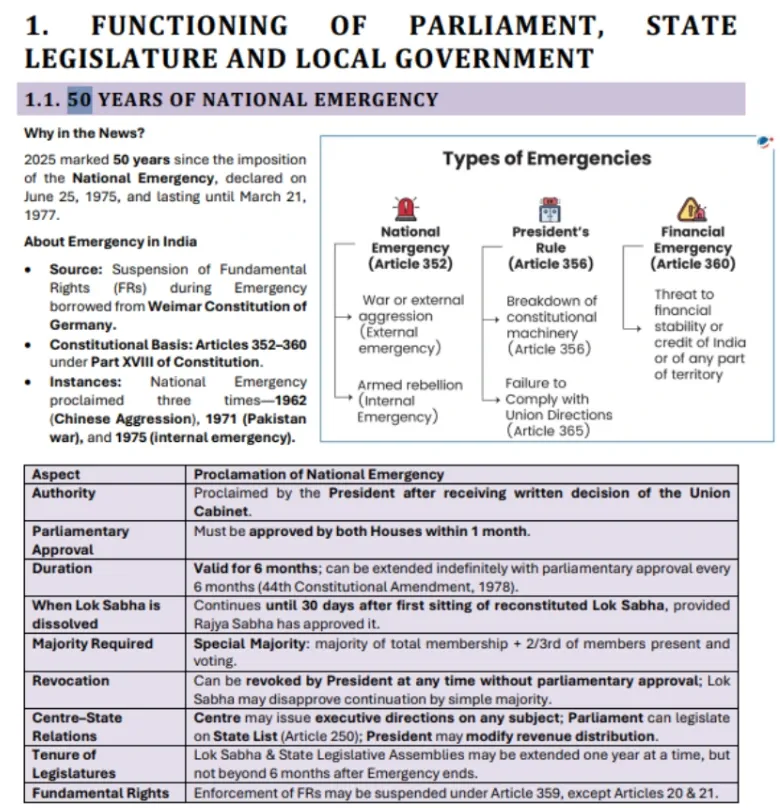
The document provides detailed coverage of institutional milestones such as Union Public Service Commission’s centenary, examining its constitutional status, functions, and evolving role in Indian governance. The 50-year anniversary of National Emergency receives focused analysis, covering constitutional provisions, historical context, and judicial interpretations that have shaped emergency powers jurisprudence.
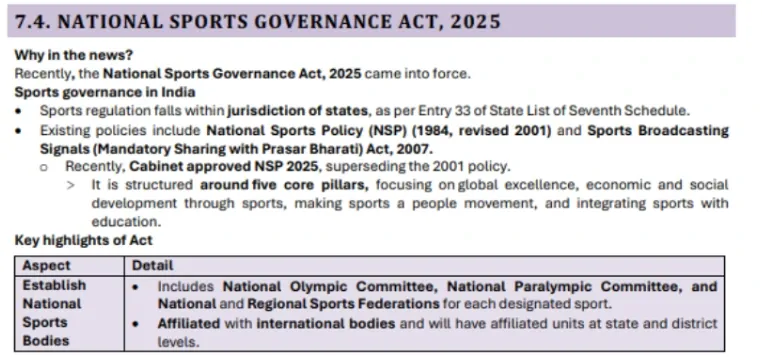
Legislative developments receive comprehensive treatment, with the National Sports Governance Act, 2025 analyzed for its institutional framework and governance implications. The National Education Policy (NEP) 2020, marking five years of implementation, is examined through its structural reforms, constitutional alignment, and implementation challenges.
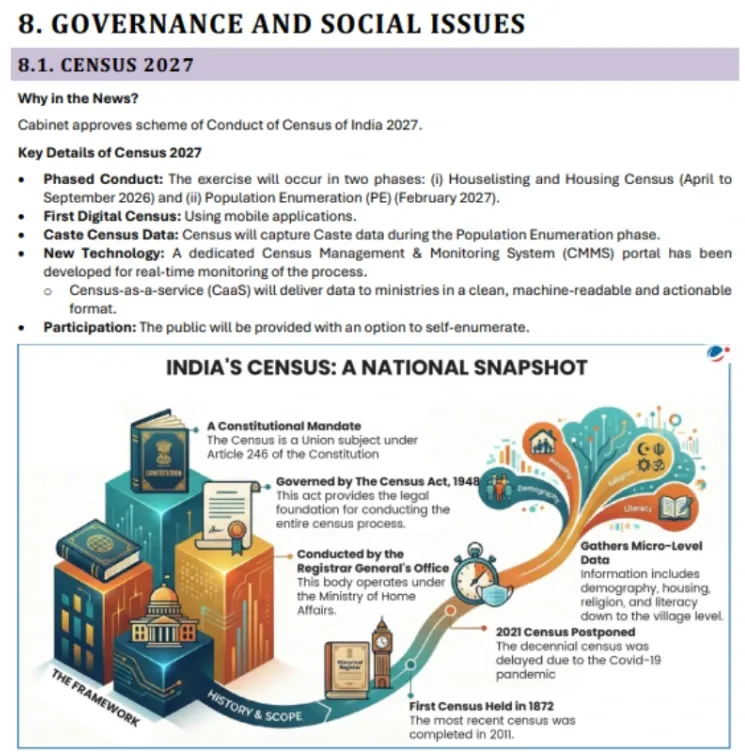
Administrative initiatives such as Census 2027 are covered with emphasis on constitutional mandates, operational framework, and governance significance. The National Human Rights Commission receives detailed examination of its statutory provisions, functions, and role in India’s constitutional architecture.
Reflections from PT365 Polity, Governance and Social Issues in Recent UPSC Prelims
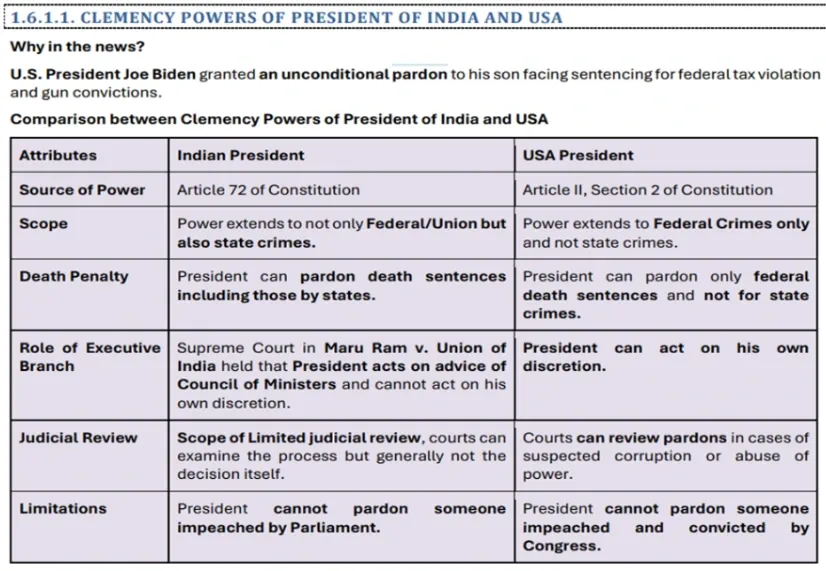
PT365 Polity, Governance and Social Issues’s examination of presidential powers included comprehensive coverage of pardoning powers under Article 72, documenting the scope of judicial review and the requirement of Council of Ministers’ advice. This preparation enabled aspirants to answer the Prelims 2025 question:
Q. Consider the following statements with regard to pardoning power of the President of India:
I. The exercise of this power by the President can be subjected to limited judicial review.
II. The President can exercise this power without the advice of the Central Government.
Which of the statements given above is/are correct? (UPSC 2025)
(a) I only
(b) II only
(c) Both I and II
(d) Neither I nor II
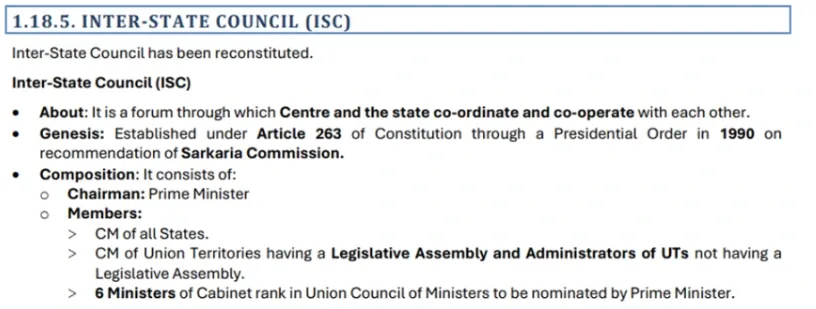
The document’s analysis of constitutional bodies and statutory councils included detailed examination of the Inter-State Council (Article 263), National Security Council (executive decision), and Zonal Councils (States Reorganisation Act, 1956). This preparation proved essential for the Prelims 2025 question:
Q. With reference to India, consider the following:
I. The Inter-State Council
II. The National Security Council
III. Zonal Councils
How many of the above are established as per the provisions of the Constitution of India? (UPSC 2025)
(a) Only one
(b) Only two
(c) All the three
(d) None
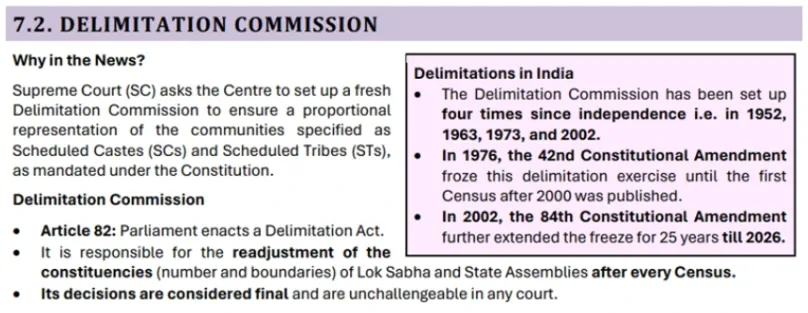
The document’s coverage of electoral reforms and delimitation processes included comprehensive analysis of Delimitation Commissions constituted since independence, documenting their constitutional and statutory basis. This preparation equipped aspirants for the Prelims 2024 question:
Q. How many Delimitation Commissions have been constituted by the Government of India till December 2023? (UPSC 2024)
(a) One
(b) Two
(c) Three
(d) Four
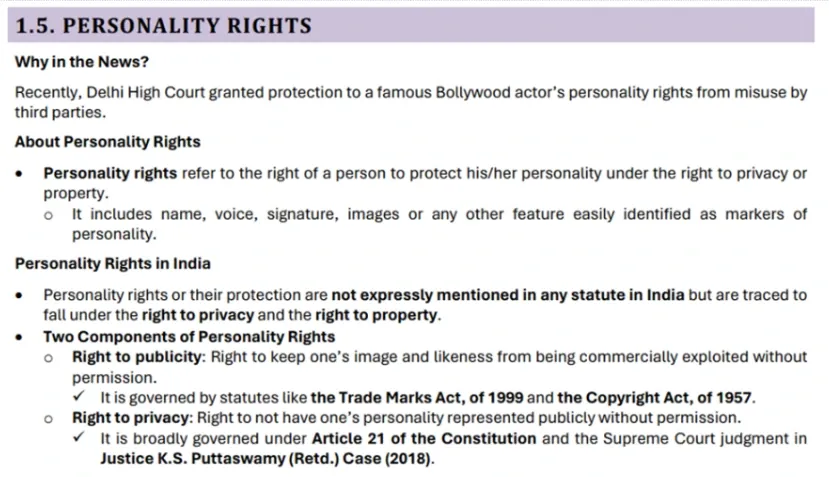
PT365 Polity, Governance and Social Issues‘s examination of fundamental rights jurisprudence included detailed analysis of the Right to Privacy judgment and its placement under Article 21 through judicial interpretation. This preparation enabled aspirants to answer the Prelims 2024 question:
Q. Under which of the following Articles of the Constitution of India, has the Supreme Court of India placed the Right to Privacy? (UPSC 2024)
(a) Article 15
(b) Article 16
(c) Article 19
(d) Article 21
These reflections demonstrate PT365 Polity, Governance and Social Issues‘s approach to identifying examination-oriented constitutional and governance content and delivering it with the precision and analytical depth that Prelims 2026 demands.
Unique Approach of PT365 Polity
PT365 Polity, Governance and Social Issues distinguishes itself through methodological innovations that transform polity preparation from textbook memorization to examination-ready comprehension.
Integration of Current Developments with Constitutional Framework
The document integrates key terms, judgments, and initiatives in news such as Talash Initiative, Kashi Declaration, and landmark judgments like K. Veeraswami vs Union of India and Others (1991). This integration ensures aspirants understand how constitutional provisions manifest in contemporary governance contexts.
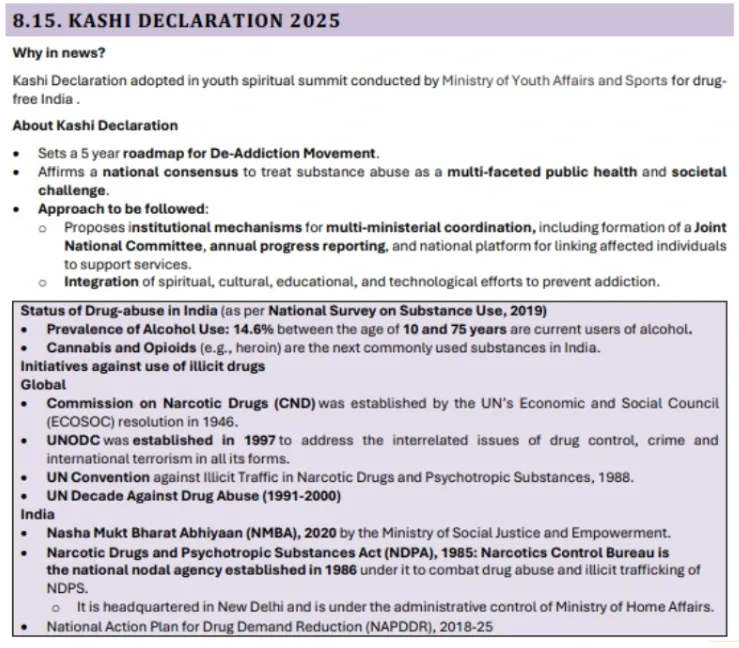
Rather than presenting these developments as isolated current affairs items, PT365 Polity, Governance and Social Issues anchors each within its constitutional and statutory framework. When UPSC frames questions requiring contextual understanding beyond surface-level awareness, this integrated knowledge architecture proves decisive.
Reference Appendices for Quick Verification
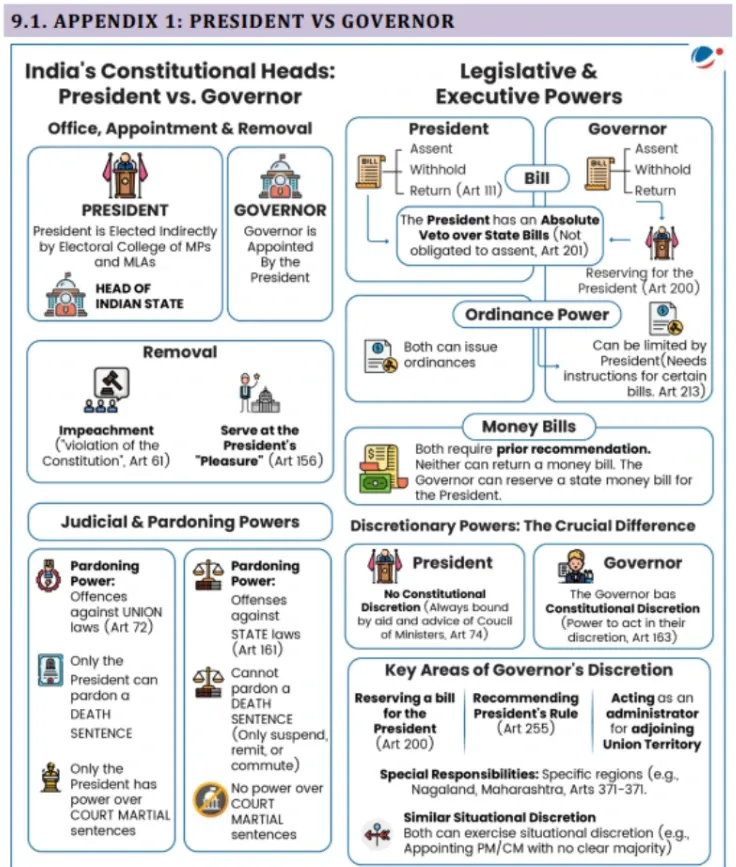
Maintaining command over governance data such as important reports, policies, constitutional amendments, and institutional frameworks presents a revision challenge. PT365 Polity, Governance and Social Issues resolves this through appendices that consolidate critical information for reference.
The appendices covering important reports, policy documents, and institutional data enable aspirants to verify factual details during final revision phases. This consolidation prevents confusion between similar provisions, committees, or judgments while ensuring coverage of examination-relevant polity elements.
Strategic Preparation with Integrated Resources
While PT365 Polity, Governance and Social Issues delivers prelims-specific constitutional and governance content, VisionIAS advocates combining it with complementary preparation resources for comprehensive success.
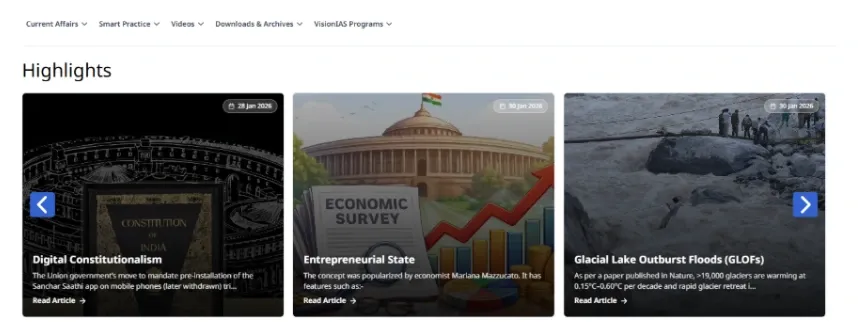
The VisionIAS Digital Current Affairs offers resources that enable aspirants to track ongoing constitutional developments, governance reforms, and judicial pronouncements throughout the preparation cycle. The platform’s thematic organization aligns with UPSC’s integrated questioning approach, allowing correlation between current governance events and foundational constitutional principles.
Conclusion
UPSC Prelims demonstrates that Polity and Governance preparation demands more than memorization of constitutional articles or awareness of government schemes. The examination evaluates understanding of constitutional mechanisms, capacity to connect governance developments with constitutional frameworks, and familiarity with both foundational provisions and contemporary reforms. With the addition of social issues coverage, the document provides a more holistic approach to prelims preparation, addressing the interconnected nature of governance and social welfare topics that UPSC increasingly emphasizes.
PT365 Polity, Governance and Social Issues fulfills these requirements through its combination of constitutional integration, current developments coverage, judicial interpretation analysis, and examination-centered methodology. The document’s record of anticipating UPSC questions across constitutional law, governance institutions, and policy frameworks validates its position as an essential preparation resource for aspirants serious about prelims success.
Leave a Reply