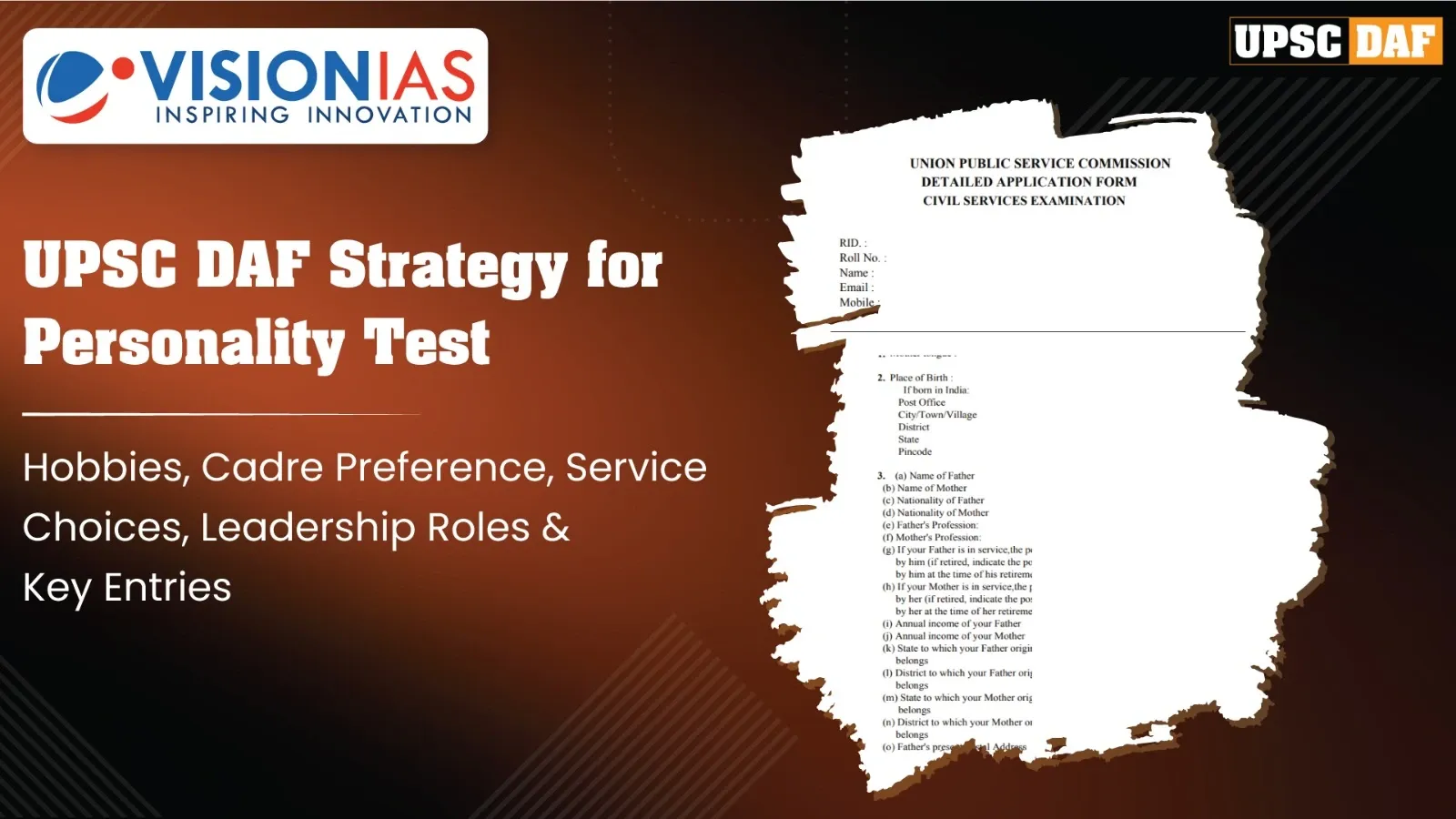
The Detailed Application Form ( DAF UPSC ) is not merely a record of personal information; it is the first professional portrait of a future civil servant. Long before a candidate enters the interview room, the UPSC panel meets their DAF. Every entry — academic choice, hobby, place of birth, work profile, achievements, preferences — becomes a thread from which questions, impressions, and expectations unfold.
With 275 marks at stake, the UPSC Personality Test has the power to elevate or drastically alter the final ranking. This stage is not a test of knowledge but a judgment of suitability for public service. The UPSC DAF becomes the bridge between a candidate’s written intellect and their lived personality, offering the board a structured window into one’s journey, values, and motivations.
Aspirants often treat the UPSC DAF mechanically, as if it were a formality. In reality, it functions as:
- a professional dossier, reflecting choices and capabilities
- a psychological mirror, revealing maturity, clarity and intent
- a declaration of public purpose, signalling readiness to serve
A well-prepared UPSC DAF is not a checklist — it is a coherent narrative of suitability for governance.
Understanding the Purpose of the UPSC DAF in UPSC Interview
The UPSC Personality Test evaluates aspirants on key traits essential for a successful civil servant. These include mental alertness, critical powers of assimilation, clear and logical exposition, and the balance of judgment. Additionally, qualities such as leadership, social cohesion, and intellectual and moral integrity are highly valued.
The panel looks for candidates who exhibit innovative thinking and the ability to devise practical solutions for complex challenges. While these traits may seem extensive, a well-structured preparation strategy—combining holistic UPSC DAF preparation, mastery of current affairs, and effective communication skills—enables aspirants to reflect these attributes confidently in front of the board.
Among others, the UPSC DAF becomes the primary lens through which personality traits are observed and tested. It allows the panel to explore the lived experience behind a candidate — not what they memorised, but how they think, why they chose what they chose, and how they have engaged with life so far.
Three layers are silently evaluated:
Every detail written earlier — hometown, subjects, extracurriculars, awards, work history — becomes a doorway into judgment, values, perspective, and clarity.
Home State, Address Details & Socio-Cultural Context
The place you come from tells a story. Your home state and your district carries developmental indicators, geography, administrative challenges, political dynamics, cultural heritage, security conditions, agriculture patterns, and social behaviour. A candidate who speaks comfortably about their region indicates awareness, connection, and a grounded perspective.
Aspirants must internalize:
- District profile: economy, demography, agriculture, industry, tourism
- Local governance issues: water, sanitation, health, education, women safety, urbanisation, migration
- Social structure: caste dynamics, tribal presence, cultural festivals (without religious bias), language dialects
- Notable personalities, institutions, historical events, reform movements
A district is not a birthplace on paper; it is the first administrative unit one must understand before aspiring to govern the nation.
Educational Background : Path & Intellectual Identity
Educational choices reflect interests and intellectual formation. Whether engineering, arts, commerce, medicine, or humanities — the panel observes how an academic trajectory shaped thinking.
Important reflections include:
- Why this degree?
- What academic experiences shaped analytical ability?
- Any research, project, fieldwork, internships, papers, or institutional roles
- Key theoretical foundations or thinkers that influenced understanding
- Social relevance of the discipline in public policy or governance
Depth matters more than name-dropping. A candidate who speaks of concepts, applications, societal linkages, and personal learning appears mature, curious, and open-minded.
Work Experience: Professional Mindset & Administrative Readiness
For working professionals, the UPSC DAF becomes a record of performance, responsibility, hierarchy, teamwork, and ethical conduct. Work experience reveals:
- Workplace culture understanding
- Decision-making exposure
- Stakeholder management
- Crisis or conflict handling
- Accountability in real settings
Questions naturally arise on:
- Why shift from a secure profession to public service?
- What administrative lessons does the private/public sector offer?
- How has the workplace shaped empathy, leadership, and discipline?
The panel looks for dignity toward past work, not escape narratives. The shift to civil services must come from purpose, not disappointment.
Hobbies: Personality Depth & Consistency
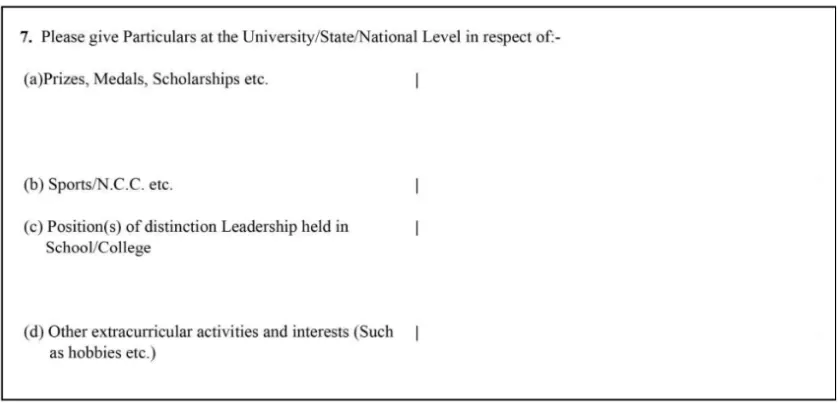
Hobbies are not fillers — they reveal emotional intelligence, cultural maturity, curiosity, discipline, and stress-handling. The board looks for authenticity and depth.
For each hobby, the candidate must hold:
- Why this hobby?
- Historical origin or evolution where applicable
- Personal engagement stories
- Technical understanding (rules, techniques, trends)
- Contemporary relevance (e.g., sports governance, literary movements)
- How it shaped values: patience, teamwork, resilience, observation, empathy
A hobby becomes credible when the aspirant speaks like a practitioner, not a claimant.
Achievements: Evidence of Excellence & Perseverance
Academic or professional recognition indicates initiative, consistency, and effort. Beyond certificates, the board searches for substance behind achievements:
- Context: competition, scale, selection criteria
- Contribution: what effort, what skill, what mindset
- Meaning: how it impacted personality and values
Successes communicate ability. The way they are narrated communicates humility and depth.
Leadership Roles: Responsibility, Initiative, Influence
Leadership in UPSC’s eyes is not about titles — it is about conduct under responsibility:
- Did others rely on your judgment?
- Did you solve problems or only participate in systems?
- Did you bring harmony, fairness, accountability, and results?
Strong leadership signals include:
- Student union initiatives
- Project or team leadership
- NSS/NCC roles
- Organising committees
- Mentorship roles
- Workplace leadership situations
Leadership for UPSC is calm authority, ethical clarity, social sensitivity, and decisiveness without aggression.
Cadre Preference for UPSC: Administrative Realism & Constitutional Understanding
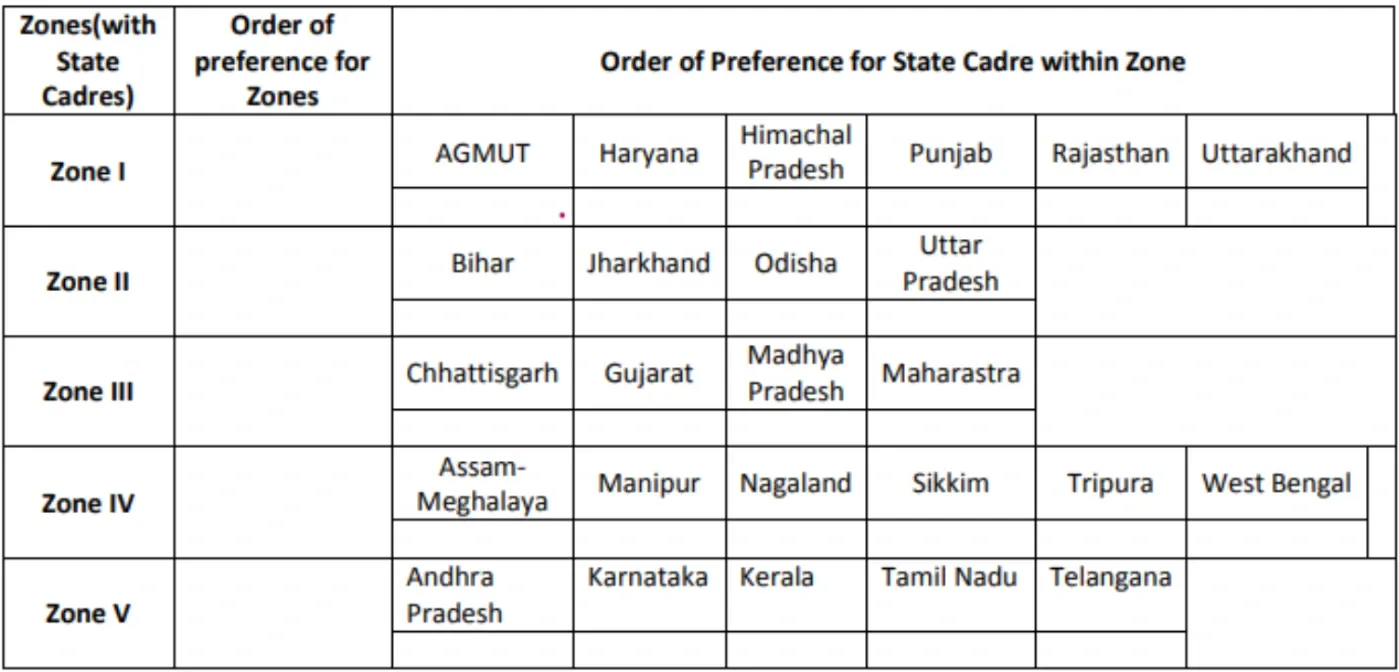
Cadre preference is not a fantasy map; it reflects administrative logic, geographical exposure, language adaptability, and cadre allocation 2027 policy alignment. The panel quietly examines:
- Do you understand India’s diversity?
- Can you work outside comfort zones?
- Are you willing to serve where needed?
Candidates are expected to know:
- Zone distribution logic
- Geographical, linguistic, socio-cultural and administrative realities
- Economic structures: industrial belts, agricultural profiles, tribal areas
- Security-law dynamics: LWE regions, border districts, coastal security
A mature approach highlights service commitment over comfort.
Service Preference Logic: Vision, Motivation, Administrative Fit
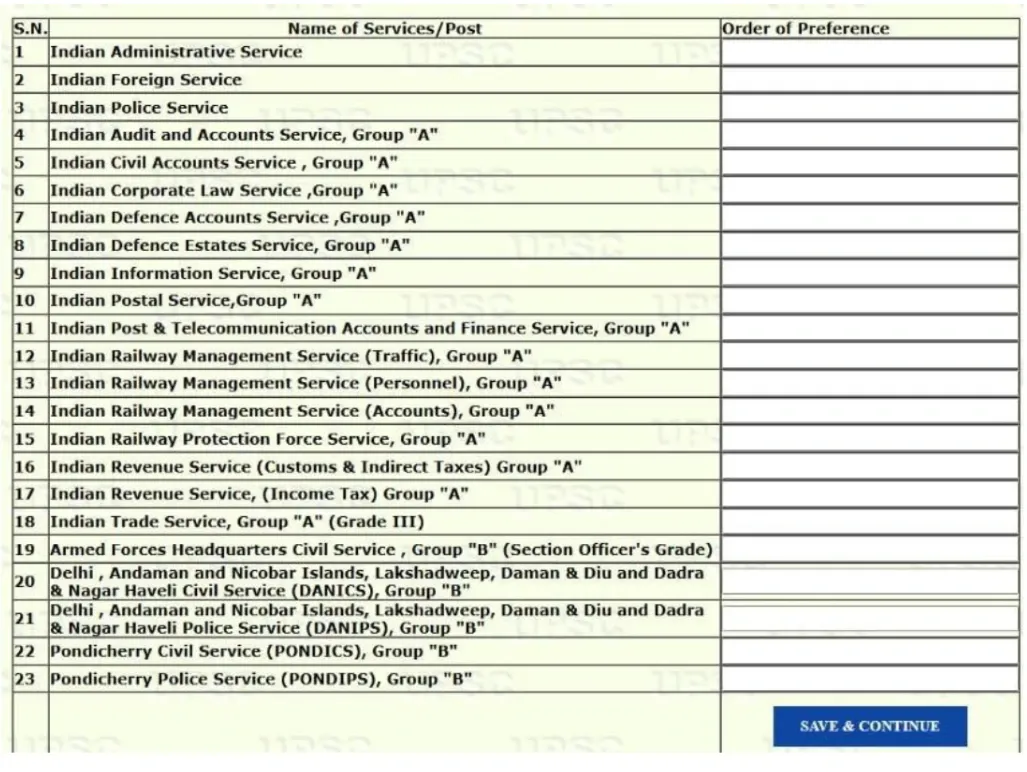
Why UPSC Civil Services is not answered with desire for power, prestige or comfort. The logic must flow from:
- Exposure to public issues
- Desire to contribute through structured administrative systems
- Appeal of public policy, welfare delivery, institutional reform
- Motivation from field officials’ impact stories
- Orientation towards rule of law, ethics, and citizen-centric governance
Aspirants reflect:
- Diversity of roles
- Policy formulation-implementation cycle
- Societal impact
- Opportunities for innovation, inclusion, systemic improvement
Service is not authority gained — it is responsibility undertaken.
Personality — The True Subtext of the UPSC DAF
Panels look beyond words. They observe:
- Balance of thought
- Ethical clarity
- Social sensitivity
- Patience and composure
- Confidence without arrogance
- Dignity of expression
- Humility with self-respect
- Evidence-based reasoning
- Ability to see multiple perspectives
The DAF becomes the anchor from which these qualities are inferred.
VisionIAS Integrated Personality Development Program
Recognizing the needs of aspirants, VisionIAS has curated a holistic Personality Development Program. This comprehensive program aims to enhance your skills and personality for the interview, featuring personalized DAF analysis, elocution sessions, mock interviews, current affairs classes, personalized mentorship, and interactive sessions with successful toppers and experienced civil servants.

Register: VisionIAS Integrated Personality Development Program
Final Reflection
An UPSC DAF is not documentation — it is identity, readiness, and purpose expressed in civil services language. Every entry must reflect thought, meaning, responsibility, authenticity, and quiet confidence. Aspirants who treat the UPSC DAF as their first act of public service accountability — not a form — stand out.
Civil services begin long before appointment. They begin with clarity of self and sincerity of intent.
Leave a Reply