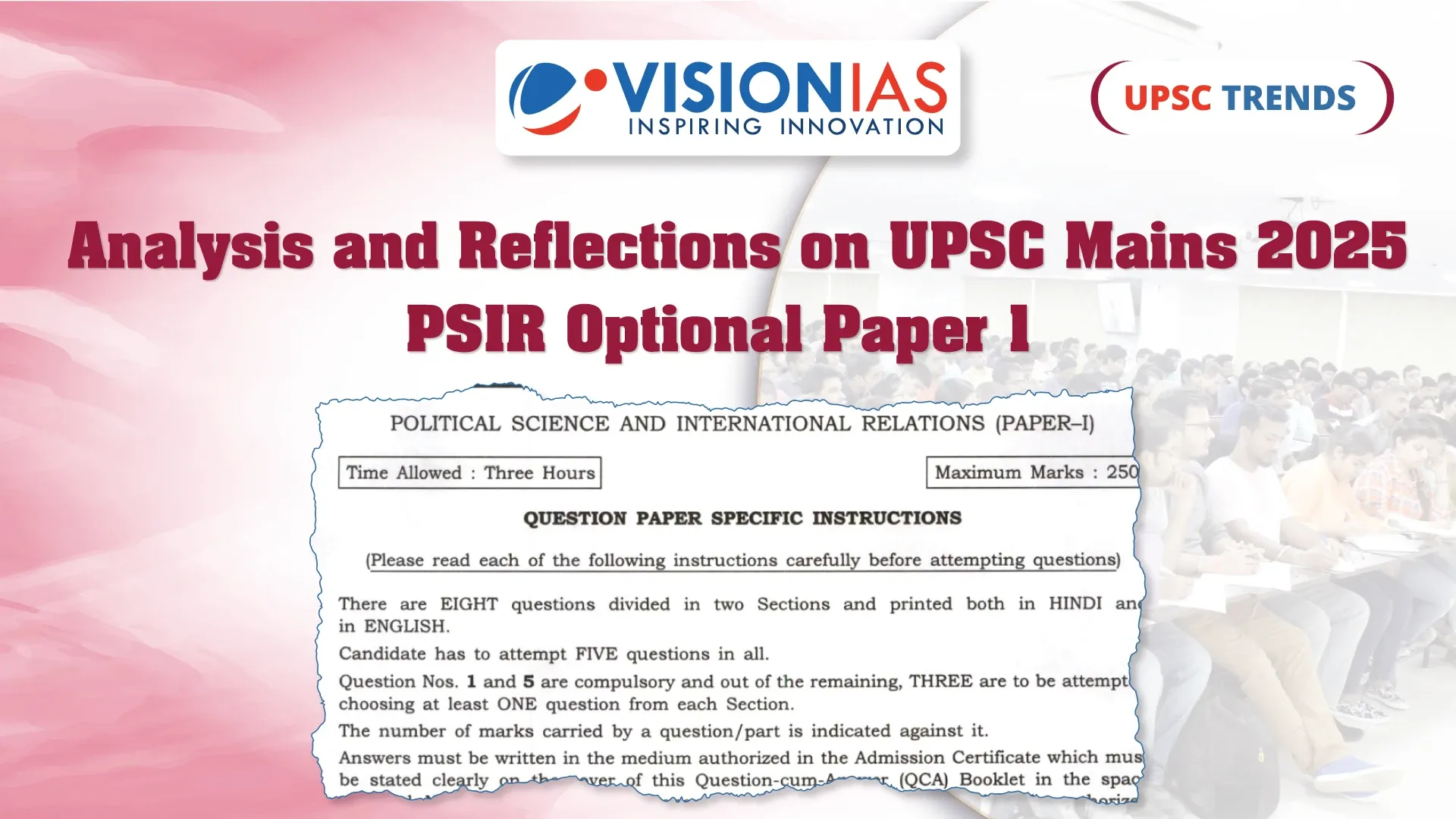
The UPSC has concluded its Civil Services Mains Examination for Optional Papers. The optional subject holds particular significance for success in UPSC Mains, as it is accounting for a notable 500 marks. The UPSC PSIR Optional Paper 1 is a test of an aspirant’s knowledge on Political Theory and Indian Government and Politics. This Paper is subdivided into two sections based on these subjects, with Section A catering to Political Theory and Concepts and Section B catering to Indian Government and Politics.
Analysis of PSIR Optional Paper 1
A Moderate and Contemporary Challenge
The UPSC PSIR Paper 1 of 2025 followed a moderate and predictable trend, with a combination of expected questions on Political theories and contemporary issues. While the Political theory section leaned on traditional themes, there was a shift towards applied understanding of concepts to answer these questions. Download Link PSIR Optional Paper 1
A breakdown of the analysis of this year’s PSIR Optional Paper is as follows:
Analysis of PSIR Paper 1 Section A: Political Theory
The political theory section (Section A) was largely in line with the expected themes, covering fundamental concepts like:
Core Themes: State and Its Theories
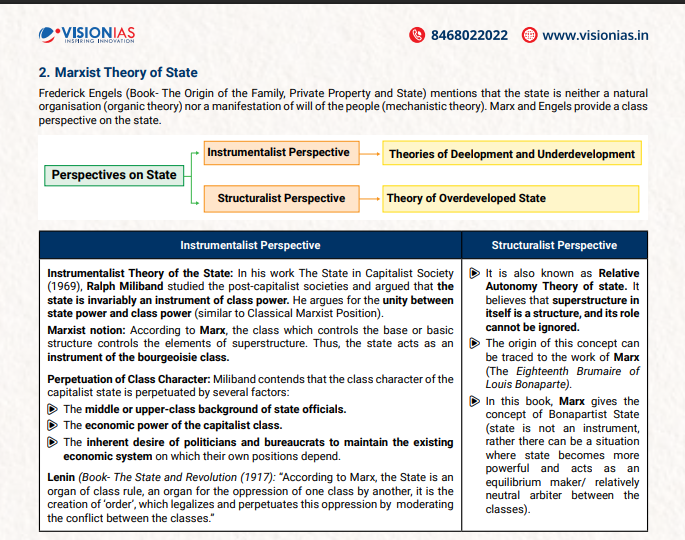
- Marxist and Liberal Understanding of the State (Q2(a)): A classic question that asked students to discuss the different perspectives on the state. Aspirants were required to showcase their theoretical knowledge of Marxist and Liberal views on the state’s role and function.
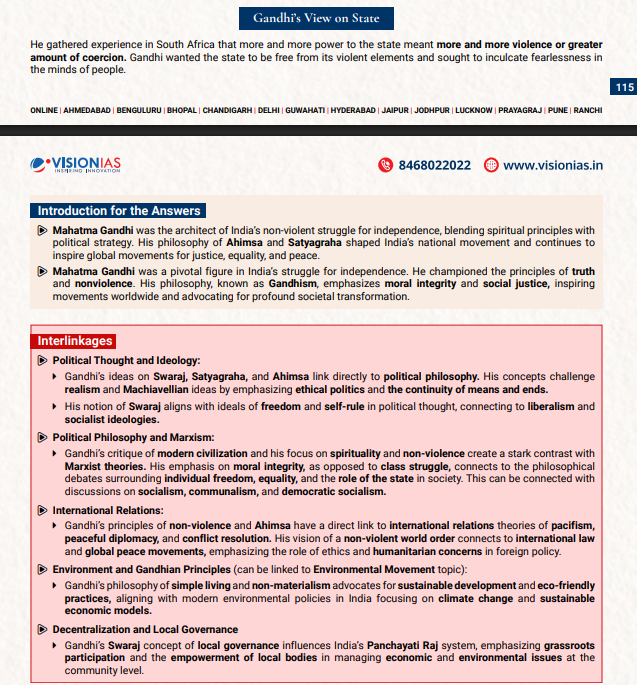
- Gandhi’s View on the State (Q3(b)): This question was expected as views of Gandhi around State are important and this question focused on Gandhi’s unique perspective on the state, asking candidates to explain his critique of both modern and traditional state systems.
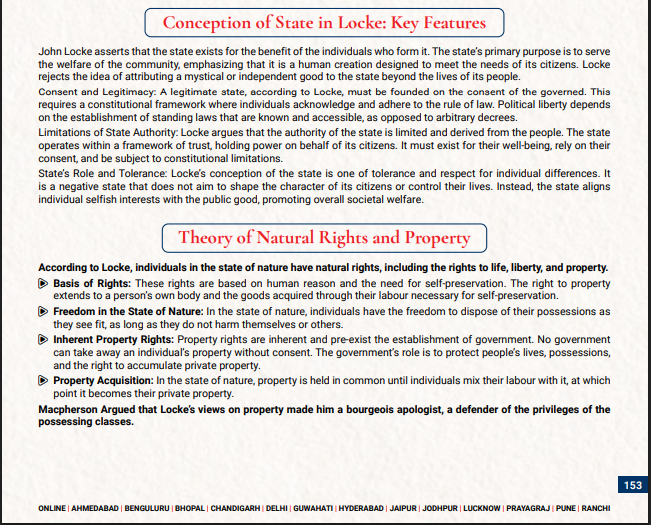
- Thinkers’ Questions: The questions on John Locke (Q4(a)) and Hannah Arendt (Q4(b)) were expected based on PYQS, as these thinkers are often asked in alternating years.
Themes requiring Applied and Critical Thinking
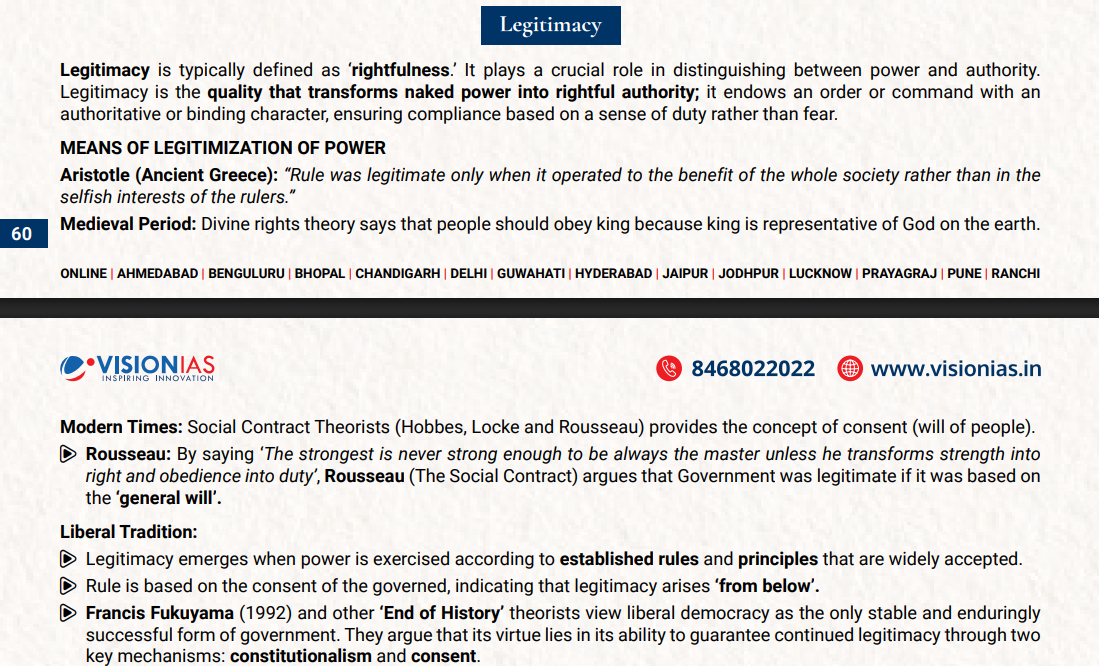
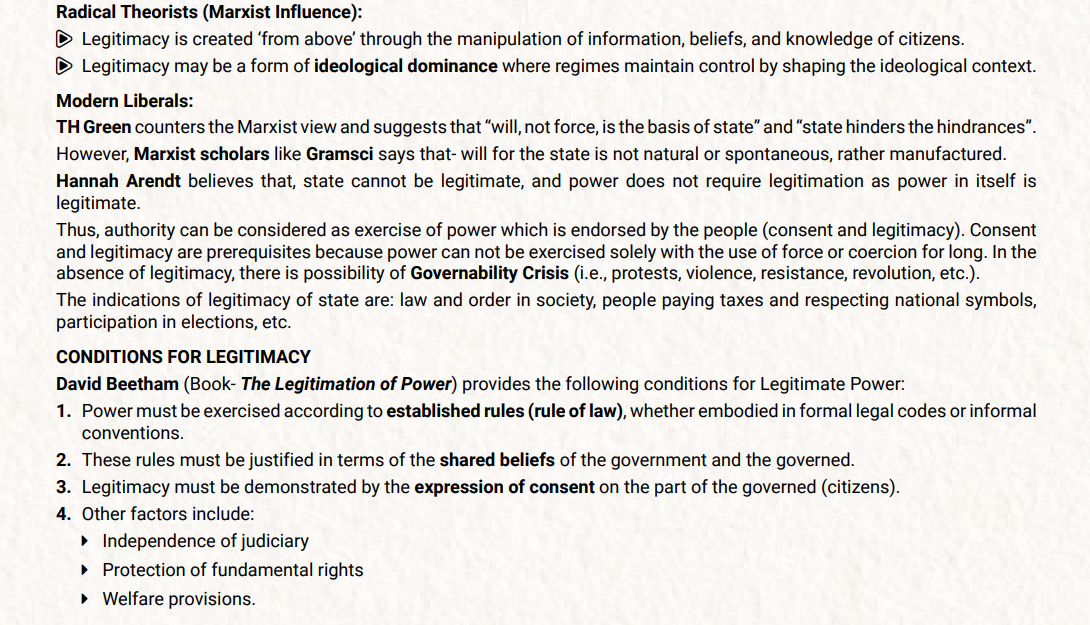
- Legitimacy (Q4(c)): The question on legitimacy required more than a basic explanation; it required the aspirant to critically analyze legitimacy in the context of modern political systems.
- Power and Macpherson’s View (Q1(c)): This question required a critical exploration of Macpherson’s understanding of power, emphasizing applied knowledge over simple definitions.
Unexpected Questions on Application of Concepts
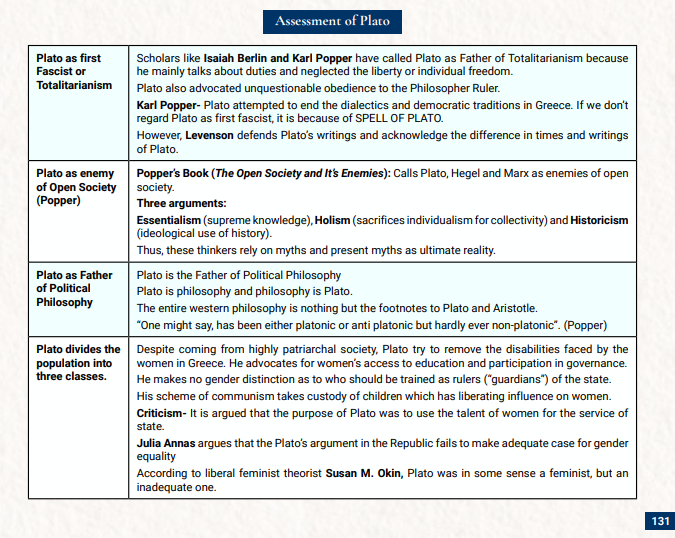
- Karl Popper’s View (Q2(b)): The question on Karl Popper, which required a more applied understanding, might have caught aspirants off guard. It demanded an exploration of Popper’s ideas on State to suitably answer the question.
Analysis of PSIR Paper 1 Section B: Indian Government and Politics
Section B of the paper focused on contemporary political issues in India. Questions here were themed around real-world events, testing candidates’ ability to connect theoretical knowledge with ongoing current developments.
Current Affairs and Political Developments
- Caste Census (Q7(b)): The question on the caste census required candidates to engage with the ongoing debate around social justice and affirmative action.
- Population Census (Q8(a)): Similarly, the population census question connected demographic data with political and economic policies, reflecting the current political discourse.
- Election Commission (Q7(c)): A question on the Election Commission called for an understanding of its evolving role and challenges in the modern political environment.
- Political Landscape in Jammu and Kashmir (Q5(d)): The issue of Jammu and Kashmir’s evolving political landscape is a critical and dynamic theme, and the paper had a question based on it. The question required aspirants’ indepth awareness of the region’s complex issues.
Static and Expected Themes:
The rest of the questions in Section B, while still based around real-world issues, were more conventional in nature and based on established themes.
- Social Movements and Justice
- Dalit Perspective of the National Movement (Q5(b)): This question explored the Dalit perspective on India’s national movement, requiring candidates to understand and discuss the marginalized voices in India’s struggle for independence.
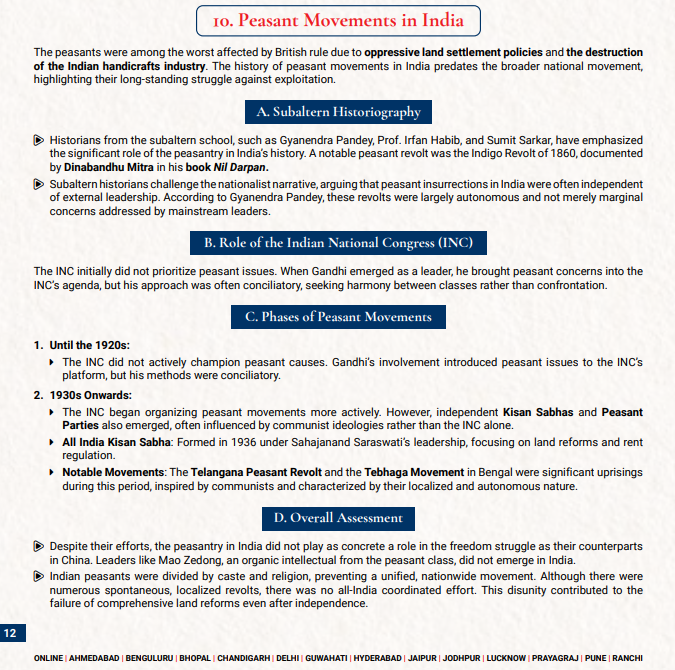
- Peasant Movements (Q5(a)): A recurring theme in the UPSC PSIR exam, the question on peasant movements required candidates to relate these movements to broader political developments in India.
- Governance and Institutions
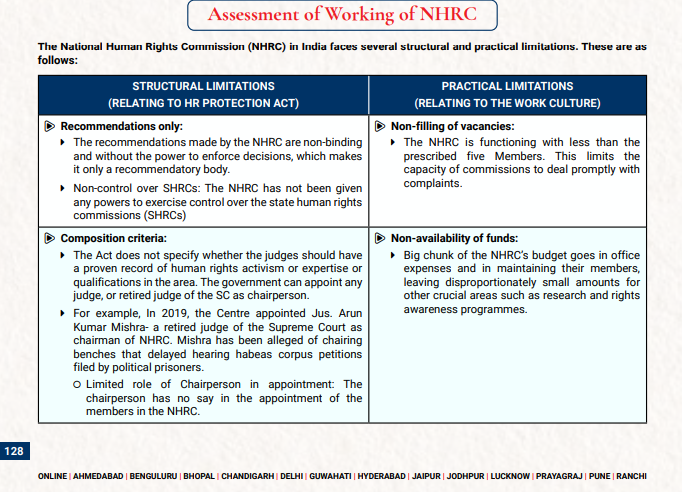
- NHRC (Q5(e)): The National Human Rights Commission was another expected theme based on PYQ analysis, with candidates needing to discuss its role in the protection of human rights in India.
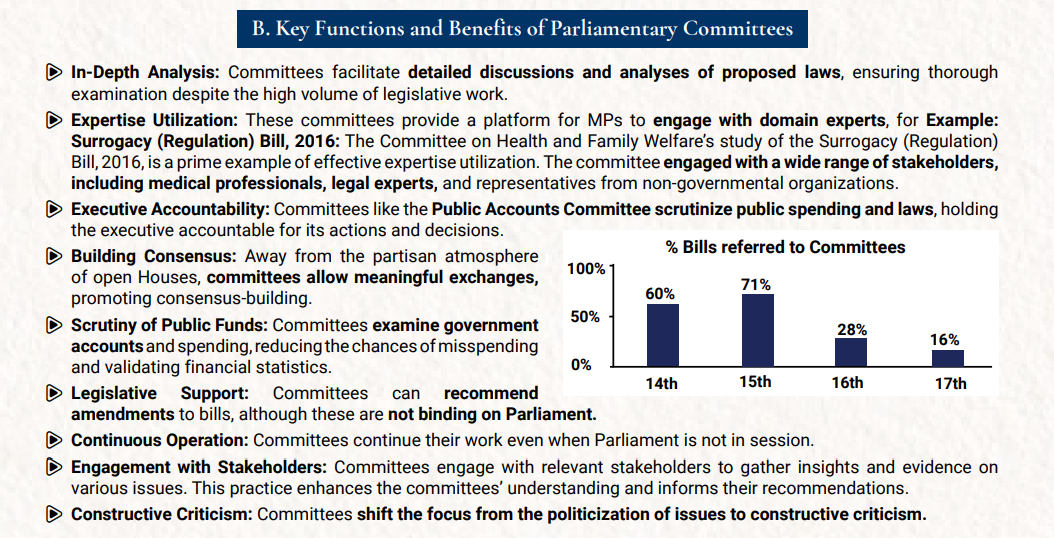
- Parliamentary Committees (Q6(a)): The question on parliamentary committees asked candidates to analyze their function and importance in Indian democracy.
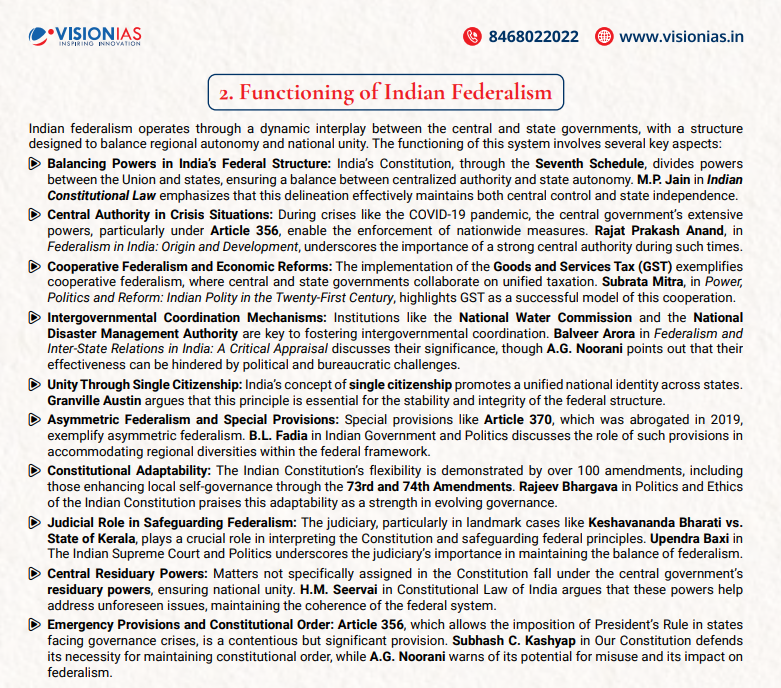
- Federalism (Q6(c)): Federalism was another standard topic that required an in-depth understanding of the structure and functioning of India’s federal system.
Overall Assessment: Moderate Difficulty with a Focus on Current Affairs
In conclusion, the UPSC PSIR Paper 1 2025 was of moderate difficulty, with a mix of expected and challenging analytical questions. The Section A (Political theory section) remained rooted in core concepts, but with an increasing emphasis on applied understanding. Meanwhile, the questions in Section B were primarily based on contemporary political issues that have been shaping India’s political landscape.
Strategy for Success
- A regular practice of previous year questions (PYQs) would have helped aspirants to familiarize themselves with the recurring themes and question patterns.
- Keeping up with current affairs and political developments was crucial, especially for the applied questions in Section B.
Overall, aspirants who had a strong grasp of core concepts, combined with an updated knowledge of current events, would have been well-equipped to tackle this year’s paper effectively.
Success in Mains 2025 with UPSC Styled Optional Questions
Our analysis on the PSIR Optional Paper 1 reveals that the complex and analytical nature of questions asked this year required aspirants to go for a holistic preparation approach for UPSC Mains to score high marks.
The Mains-centric initiatives of Vision IAS, particularly the UPSC PSIR Value Added Material (VAM) and UPSC Test Series for PSIR Optional are specifically designed to develop this ability. The Vision IAS PSIR Optional Test Series featured 4 Sectional Tests, 4 Full Length Tests and 2 Abhyaas Tests.
Further, The Value Added Material provided detailed coverage of the syllabus along with contemporary case studies and examples for answer enrichment. Our initiatives on PSIR Optional for UPSC mains have yielded great returns this year as well.
- The trust students placed on us was visible in UPSC PSIR Optional Paper 1 in which 20 out of 28 questions were reflected in our Test Series.
- Using the PSIR Optional Paper 1 Value Added Material, the aspirants could cover 20 out of 28 questions asked this year.
This high impact in UPSC Mains Paper is a testament to the direct relevance and effectiveness of combining Test Series and VAM for success in UPSC Mains.
Reflections in PSIR Paper 1 from Vision IAS PSIR Optional Test Series
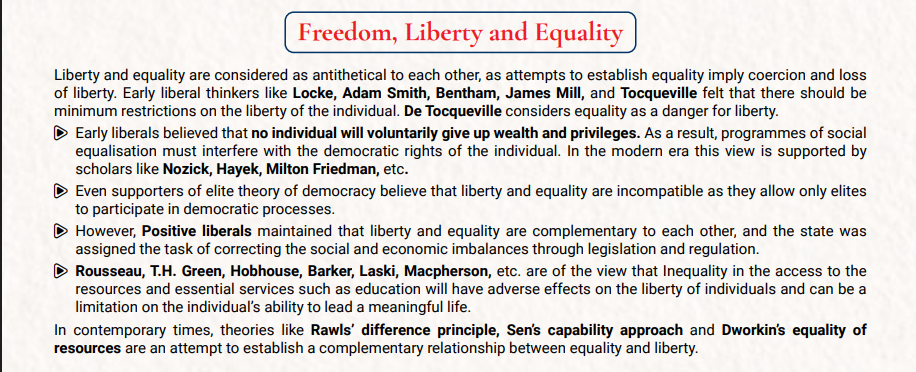
The PSIR Optional Paper 1 test question is a direct reflection of the UPSC question as both questions demand the relationship of liberty and equality. The Vision IAS Test thus provided all the essential components required for a comprehensive answer for the UPSC Mains question. It included:
- Contextualisation of Liberty: The Vision IAS test series Model Answer on the relationship between liberty and equality provides a strong base for introduction to this question. By outlining classical liberal, socialist, and reconciliatory perspectives, it captures the core concepts and their historical tension which can be used as ready made intro for the question.
- Analytical Depth: The test series question was structured in such a way to capture the focus on defining liberty and equality, and explaining why these ideas often appear in conflict. This establishes the philosophical foundation of the answer.
- Expansion & Examples: The PSIR Test series helped students understand how to incorporate the examples in this question. For Instance, in this question the model answer asked students:
- To adapt the framework to a multicultural perspective, aspirants could expand liberty from individual freedom to include the collective liberty of cultural groups.
- Add that Equality should be broadened beyond equal opportunity to include differentiated rights, ensuring minorities are not disadvantaged.
- Mention thinkers like Will Kymlicka and Bhikhu Parekh to highlight how liberty and equality are reconciled within pluralistic societies, balancing autonomy with cultural recognition.
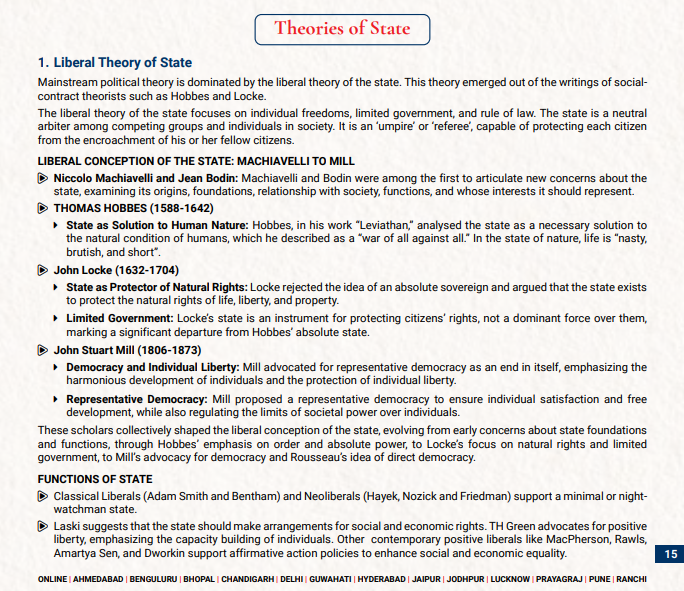
The PSIR Optional Paper 1 test is a direct reflection of UPSC question as both questions demand the comparative analysis of Marxist and liberal Theory of the state. The Vision IAS Test thus provided all the essential components required for a comprehensive answer for the UPSC Mains question. It included:
- Introducing Thinkers & State: The Vision IAS PSIR model answer introduces the liberal State as a product of the social contract (Locke, Mill, Rawls), ensuring rights, rule of law, and justice.
- It contrasts this with the Marxist view of the State as a superstructural tool of class domination (Marx, Engels, Lenin).
- This contrast directly provides the theoretical basis of the debate—neutral arbiter versus class instrument—that the UPSC question demands.
- Analytical Depth: The debate between Liberalism and Marxism on the role of the State was discussed in our PSIR Optional Test series question.
- While UPSC emphasizes the approach and grounds of difference, our question highlights this contrast by placing the liberal view of the State as a protector of rights against the Marxist view of it as an instrument of class oppression.
- Expansion & Examples: The Vision IAS Test Series question also equips aspirants to engage with related concepts like property, freedom, and justice to substantiate the differences.
- For instance, liberals defend private property as a right, while Marxists see it as the root of exploitation.
- Thinkers such as John Rawls on justice and Lenin on the withering away of the State provide strong examples to enrich the answer.
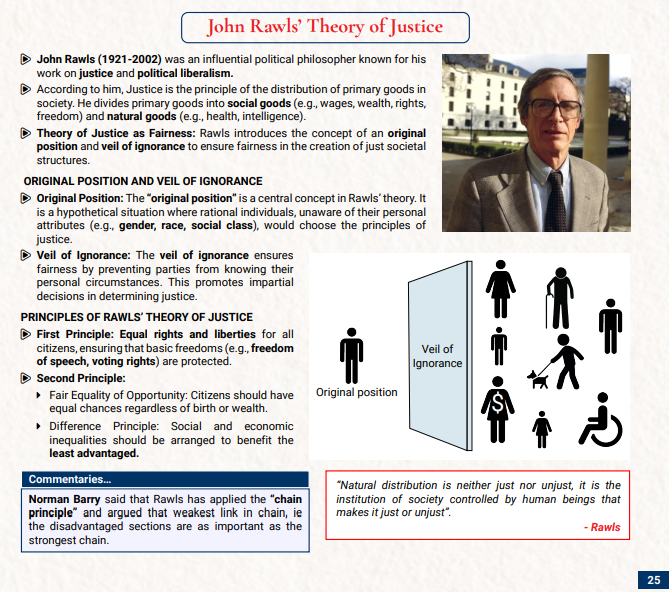
The PSIR Optional Paper 1 test is a direct reflection of UPSC question as both questions demand the foundations of Rawls theory of justice. The Vision IAS PSIR Optional Tests provided the major components required for a comprehensive and concise response for the UPSC Mains exam. It included:
- Rawls’ and his Views: The Vision IAS PSIR Tests model answer explains Rawls’ framework on justice through the original position, veil of ignorance, and his two principles—equal basic liberties and social-economic inequalities (difference principle and fair equality of opportunity).
- This directly addresses the demand of the UPSC question by showing how Rawls preserves liberal values of liberty and rights while integrating egalitarian concerns of benefiting the least advantaged.
- Analytical Depth: The debate around Rawls’ distributive justice was a common theme in question asked by Vision as well as UPSC.
- While the UPSC question explicitly asks how Rawls combines liberal and egalitarian perspectives, Vision IAS emphasizes the difference principle that balances liberty and equality.
- Expansion & Examples: The Vision IAS model answer enables aspirants to use practical illustrations alongside theory.
- For instance, Rawls’ emphasis on redistribution and fair access can be related to measures like progressive taxation and affirmative action.
- This shows how his theoretical synthesis of liberty and equality has contemporary policy relevance, strengthening the quality of the answer.
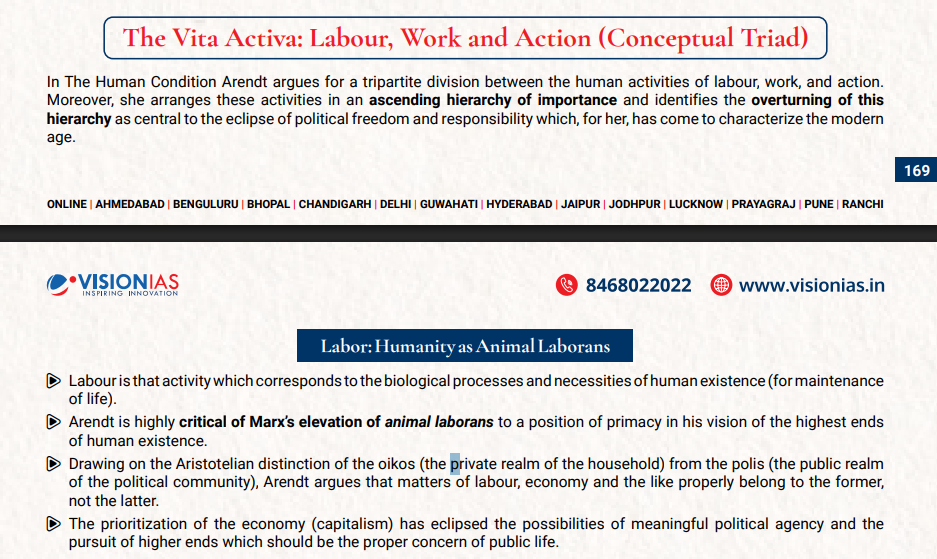
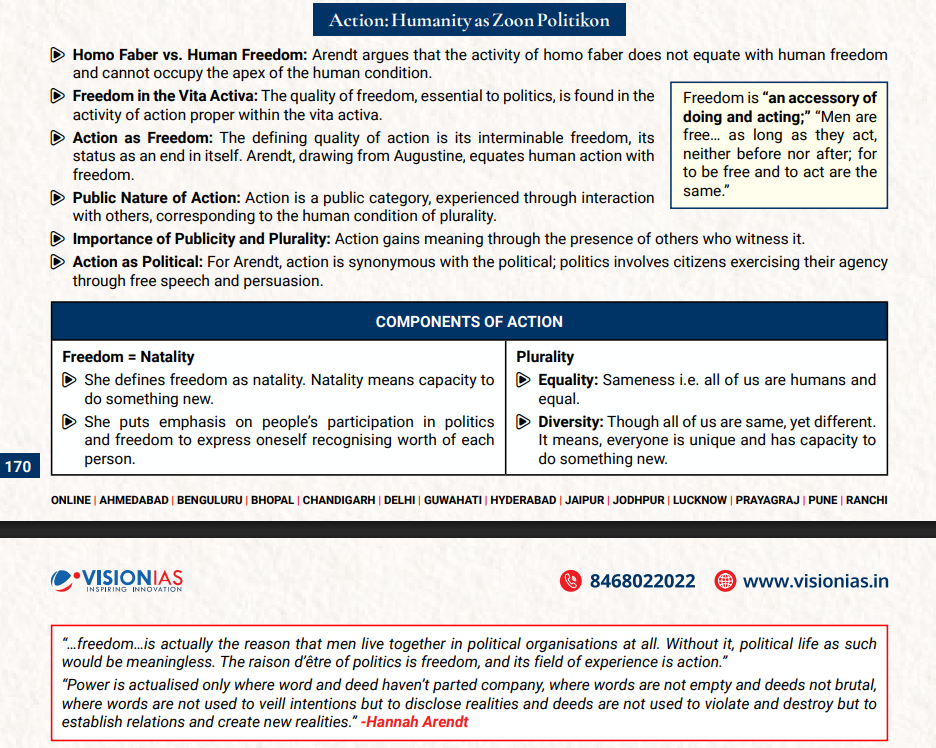
The PSIR Optional Paper 1 test is a direct reflection of UPSC question as both question demand the discussion of Hannah Arednt’s theory of action. The Vision IAS PSIR Optional Tests provided the major components required for a comprehensive and concise response for the UPSC Mains exam. It included:
- Vita Activa of Ardent: The Vision IAS model answer clearly outlines Hannah Arendt’s categories of vita activa—labour, work, and action—as explained in The Human Condition (1958).
- Labour represents biological necessity and cyclical processes, work reflects the creation of a durable world of objects by homo faber, and action signifies speech, plurality, freedom, and natality.
- This could be used for both the core part of the answer, as well as the introduction of the answer.
- Analytical Depth: Both UPSC and Vision IAS frame the debate around Arendt’s analysis of modernity.
- While the UPSC question asks for an explanation of her categories of vita activa, the Vision IAS answer links these categories to her critique of the decline of political action in modern society.
- This connection enables aspirants to highlight the philosophical tension Arendt underscored between material necessity and the realm of free political action.
- Expansion & Examples:
- The Vision IAS model answer helps aspirants enrich their answers with examples such as labour in subsistence economies, work in industrial production, and action in democratic movements.
- Using these illustrations allows students to connect Arendt’s categories with contemporary political realities, thereby strengthening the application-oriented dimension of the response.
Other UPSC PSIR Paper 1 Mains 2025 Questions reflected in our PSIR Optional Test Series include
Mastering Answer Writing with Vision IAS PSIR VAM Paper 1
The Vision IAS UPSC VAM for PSIR Optional has been consistently trusted by toppers for UPSC Mains preparation. Designed in line with the evolving UPSC trends, this VAM provides aspirants with value-added content that helps them practice answer writing with the analytical depth expected in the UPSC Optional papers.
Reflections in PSIR Paper 1 from Vision IAS Value Added Material
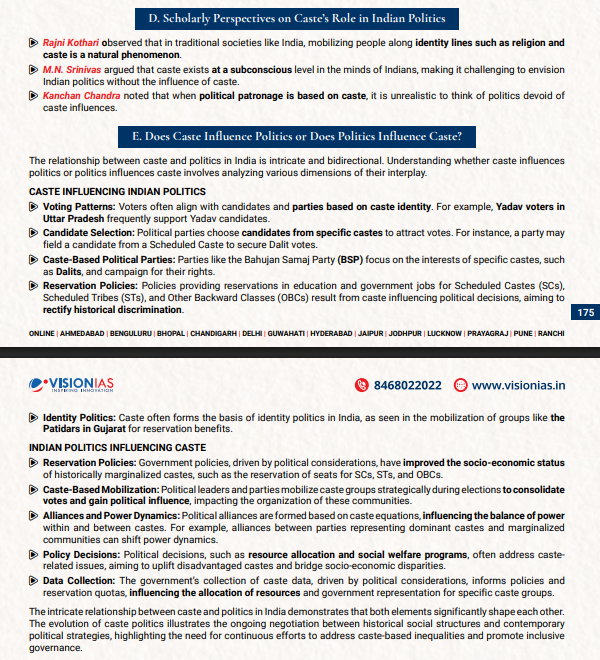
UPSC PSIR Optional Q 1
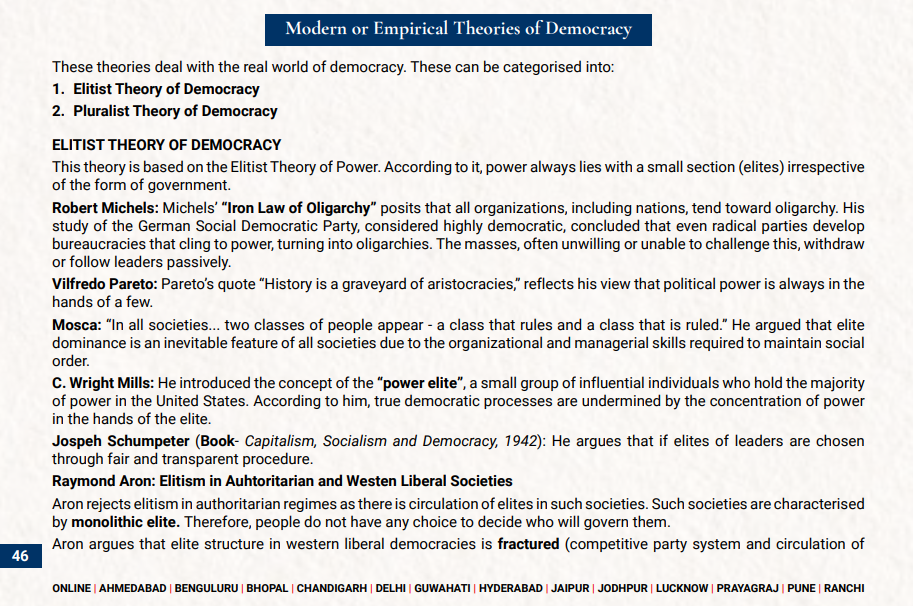
(e). Explain briefly the elite theory of democracy
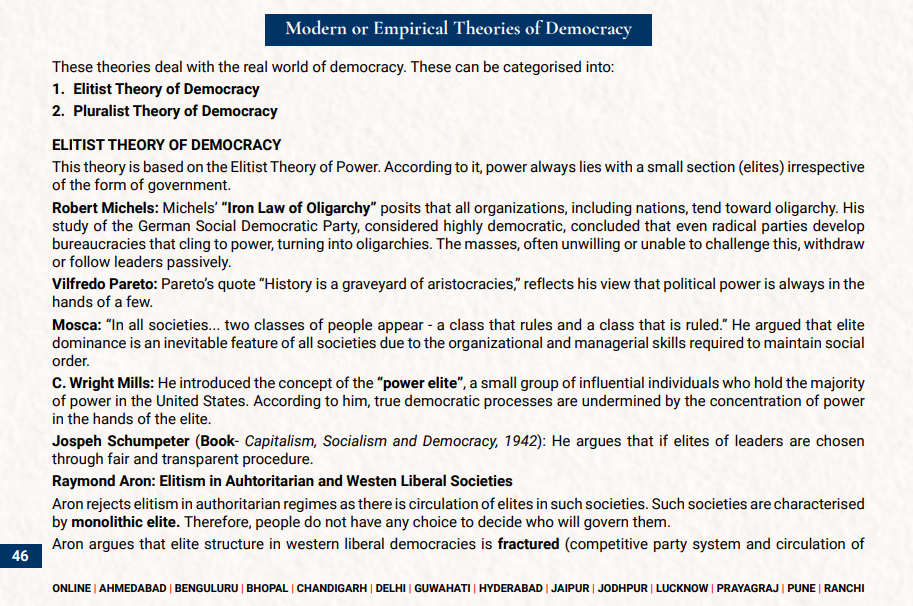
The PSIR Optional Paper question of UPSC was a direct reflection from the Value addition material. The PSIR Paper VAM provided components like:
- Theories on Democracy: The VAM provided a clear definition of democracy and linked it to the elite theory of democracy, establishing a strong conceptual base for the answer.
- Analytical Depth: The VAM offered a detailed discussion on the different models of democracy—classical, participatory, pluralist, and elite. This discussion would have helped aspirants effectively write the arguments, highlight the contrasts between democratic ideals and elite dominance, and critically evaluate how democracy functions in practice.
UPSC PSIR Optional Q 5
(b). Write a note on dalit perspective of Indian National Movement
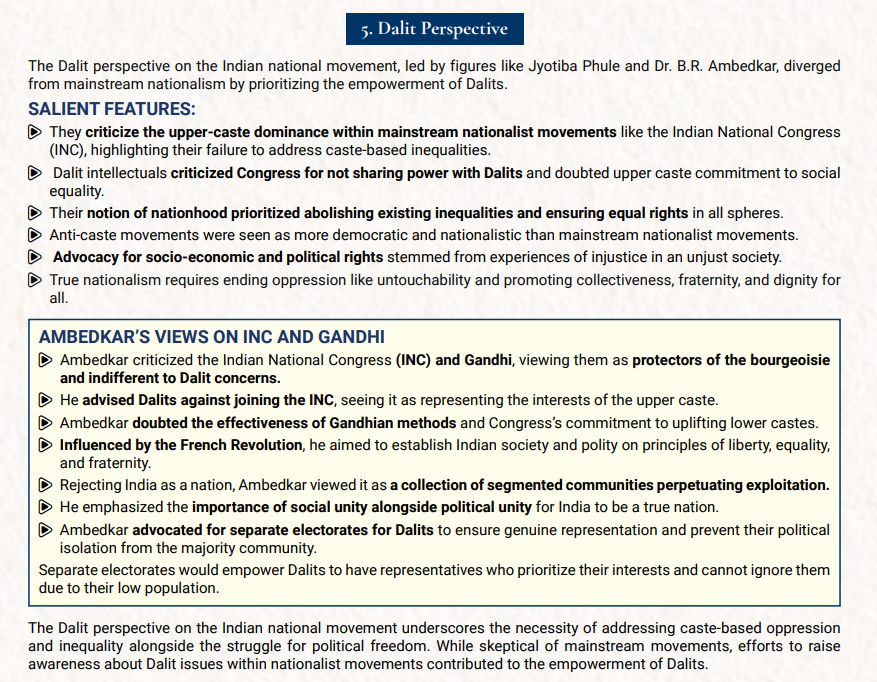
The PSIR Optional Paper question of UPSC was a direct reflection from the Value addition material. The PSIR Paper VAM provided components like:
- Perspectives on National Movement: The VAM provided context of the different perspectives of studying the National Movement and included a dedicated section on the Dalit perspective, which could be effectively used to frame the introduction and set the context of the answer.
- Analytical Depth: The VAM offered a detailed discussion on the range of perspectives, enabling students to effectively write, compare, and relate the arguments. The discussion on the Dalit perspective added depth by highlighting marginalized viewpoints, which are crucial in addressing the demands of this question.
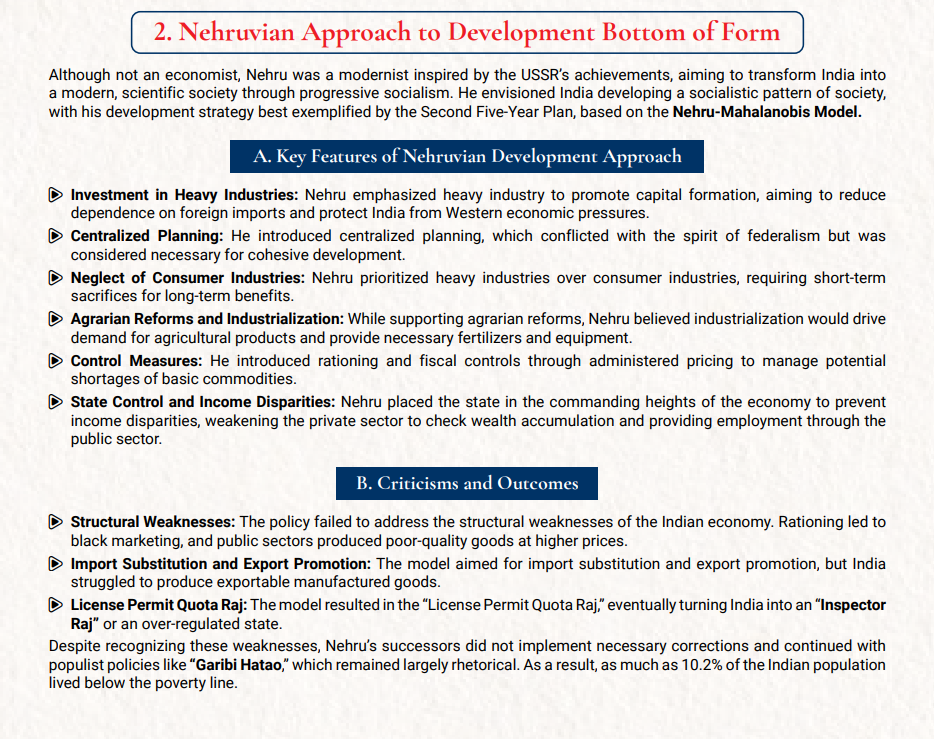
UPSC PSIR Optional Q 7
(c). There is a debate on the procedure of appointment of the chief Election commissioner and Election commissioners of the Election Commission of India. Analyse its various aspects.
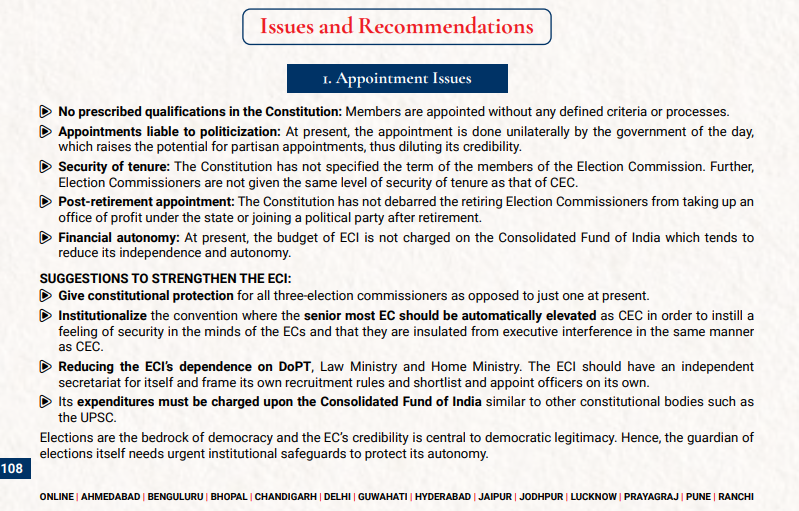
The PSIR Optional Paper question of UPSC was a direct reflection from the Value addition material. The PSIR Paper VAM provided components like:
- Debates around ECI: The VAM provided effective discussions and debates on the Election Commission, helping aspirants to frame strong introductions and set the context of the answer.
- Analytical Depth: The VAM offered a detailed discussion on the issues of appointment and removal of Election Commissioners, covering the legal, institutional, and political dimensions that are essential for analytical depth in the exam. This could be used to write an effective answer to the question
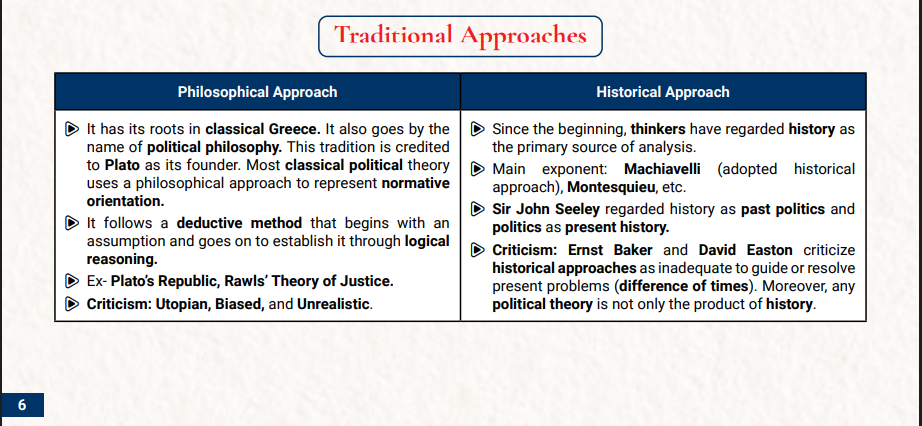
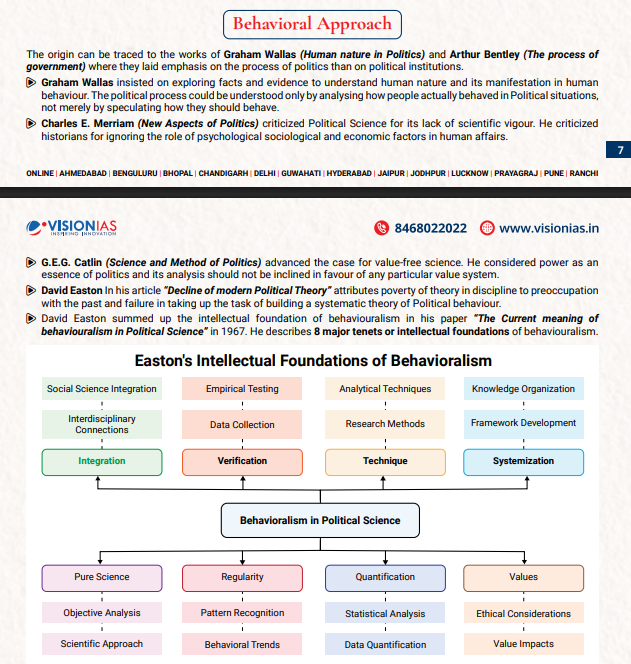
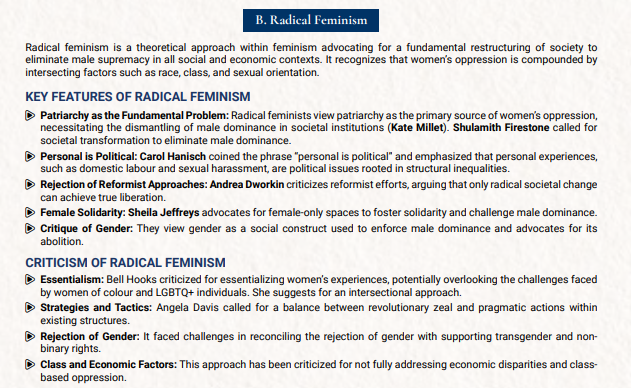
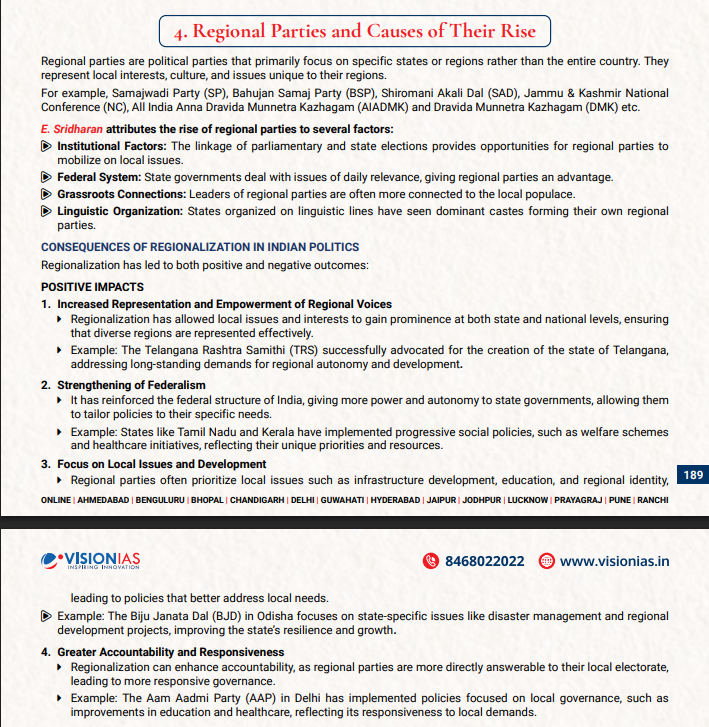
Other UPSC PSIR Optional Mains 2025 Questions reflected from our PSIR Optional Paper 1 VAM include:
Final Thoughts
The analytical nature of this year’s UPSC PSIR Optional Mains paper holds significant implications for all aspirants, particularly those targeting UPSC 2026. Success in the UPSC Mains demands a sophisticated approach to answer writing, especially for those preparing with an UPSC PSIR Optional subject.
Reflections on UPSC Mains 2025 PSIR Optional Paper 1 indicate the growing need to integrate both static knowledge and contemporary developments in answer writing. Aspirants of PSIR Optional can particularly benefit by aligning their preparation with evolving trends, since UPSC PSIR Optional requires the ability to interlink core concepts with current affairs.
By utilizing structured resources like Vision IAS UPSC PSIR Optional Test Series and high-quality UPSC Value Added Material (VAM), aspirants can learn how to structure answers, enrich them with relevant examples, and develop the analytical depth needed in PSIR for IAS preparation. Such an approach ensures that the UPSC Optional, particularly PSIR Optional, is tackled with precision and consistency, ultimately improving performance in the UPSC Mains.
Vision IAS Resources for UPSC CSE 2026
- Enroll in Vision IAS GS Foundation course for holistic preparation of UPSC exam
- UPSC Mains high quality, updated and toppers trusted notes and documents by Vision IAS at UPSC Mains Corner.
- Explore topper’s trusted and recommended most important answer-writing tool for UPSC CSE Examination, the VisionIAS Mains Test Series, to effectively practice answer writing for Mains 2026.
- Explore topper’s trusted and recommended most important Optional Preparation and Practice resource for UPSC CSE Examination, the VisionIAS Optional Test Series, to effectively practice answer writing for Mains 2026.
- To pursue a mentored approach for UPSC Mains 2026 check our Lakshya Mentoring Services. Lakshya has been a trusted mentoring service used by many toppers.
- Vision IAS provides a new age, AI integrated Digital Current Affairs solution that can help you navigate the course of Current affairs. The flagship “Vision Intelligence” can help you keep a track of the enormous task of handling current affairs in your preparation. These resources can be found at our dedicated Current Affairs page.
- We at VisionIAS also prioritise mental health of all students. At Student Wellness Cell, you can reach out to us for counseling if you feel overwhelmed with the exam. We strive to assist the students and help you with effective stress and time management under the guidance of best counselors.
Leave a Reply